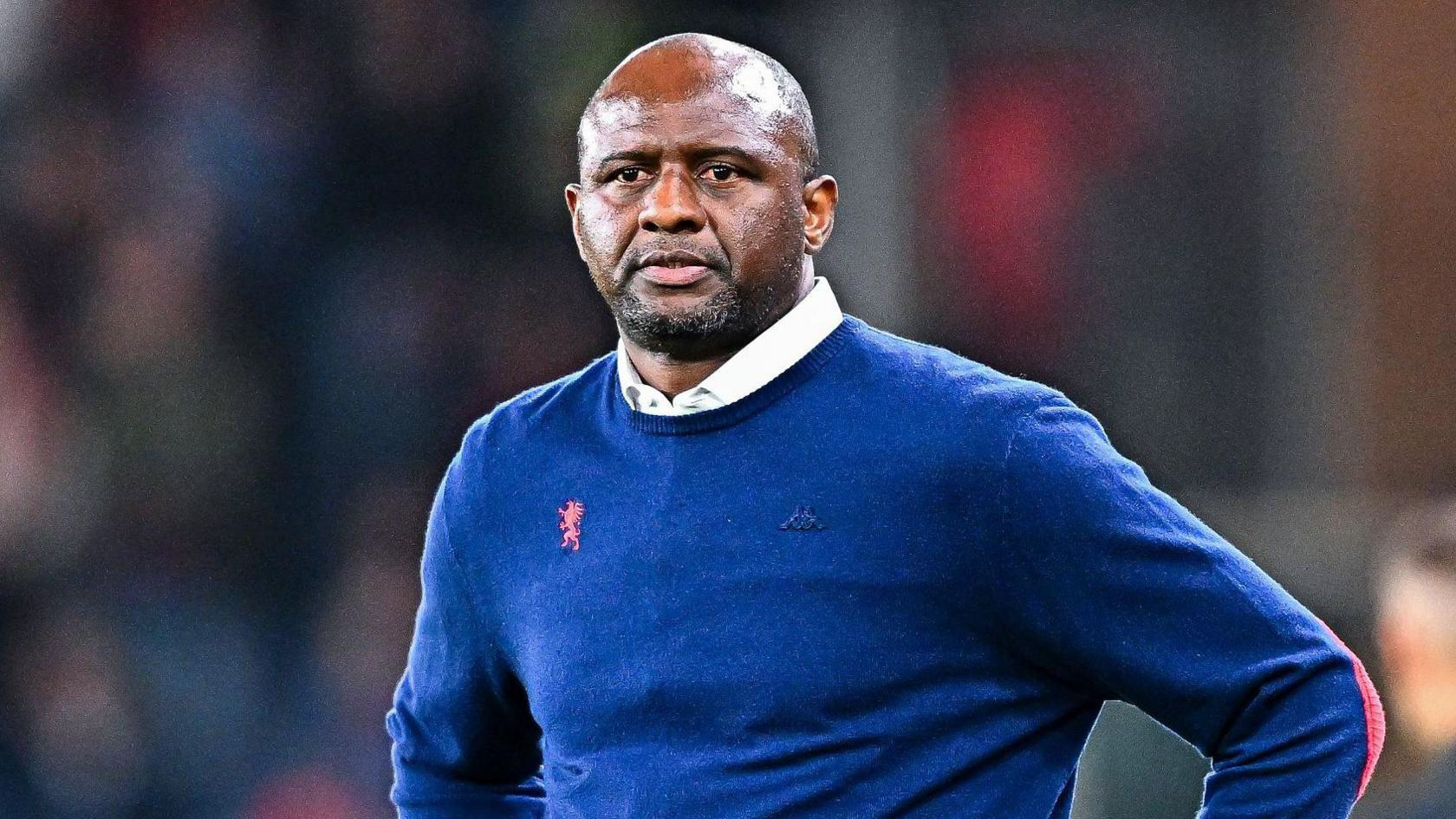
Patrick Vieira's football journey has taken him almost everywhere.
From Dakar to France. From Cannes to AC Milan. From Arsenal to Juventus, Inter Milan and Manchester City. From World Cup winner with France to coaching jobs in England, France, Italy and Major League Soccer.
Now, at 50 years old, that journey has brought him back to Senegal.
Vieira has been appointed head coach of the Senegal men's national team, replacing Pape Thiaw following the Lions of Teranga's elimination from the 2026 FIFA World Cup. It will be Vieira's first job managing a national team.
And perhaps the most interesting part of the appointment isn't simply where Vieira was born.
It's what Senegal needs him to fix.
A World Cup that felt unfinished
Senegal's 2026 World Cup is difficult to summarize by results alone.
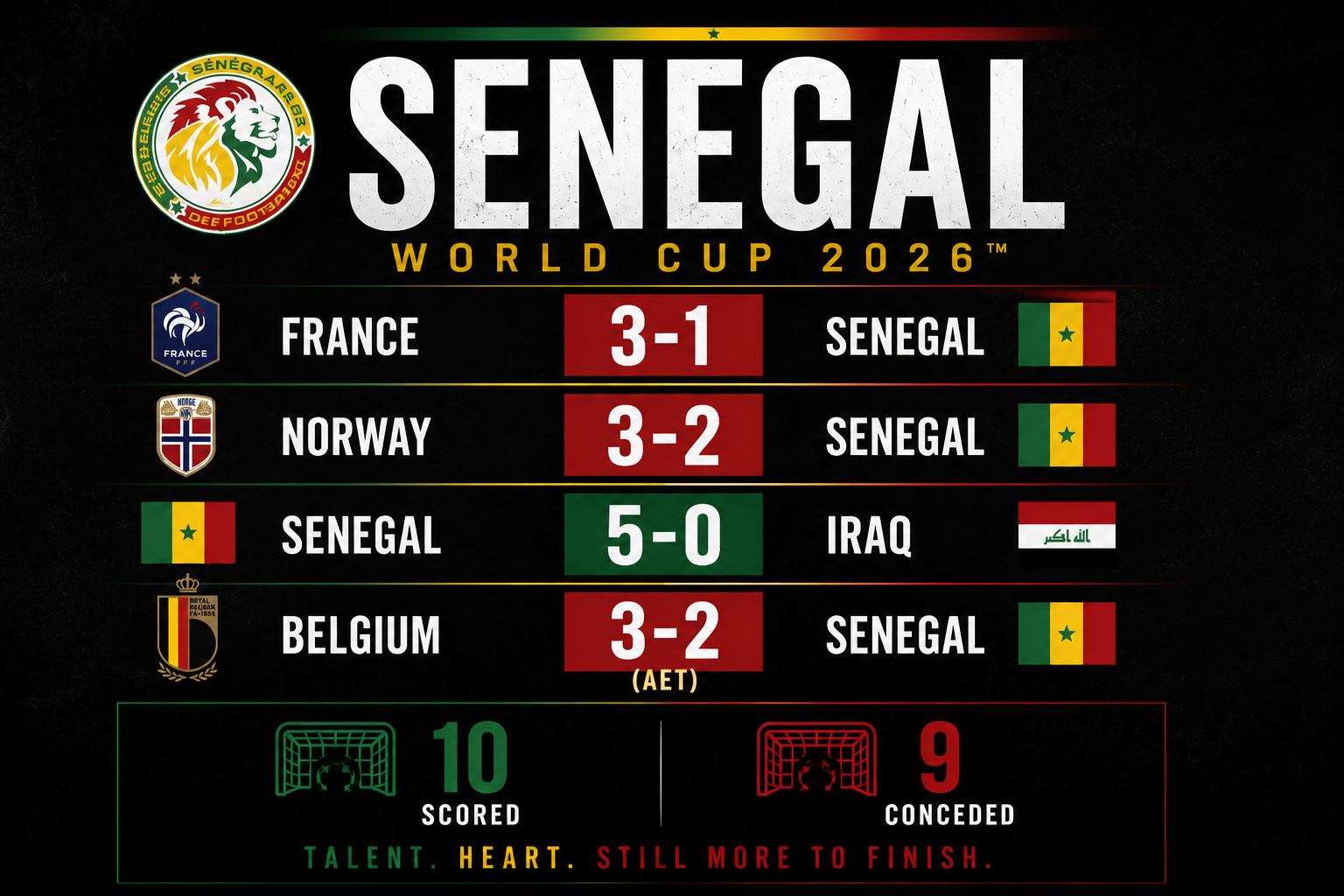
They lost 3–1 to France. They fell 3–2 against Norway. With qualification on the line, they responded by dismantling Iraq 5–0 and advancing to the knockout stage. Then came Belgium.
And that match might tell Vieira more about his new team than anything else from the tournament.
Senegal were excellent for long stretches.
They attacked the wings, played with confidence and put Belgium under pressure. Habib Diarra opened the scoring before Ismaïla Sarr made it 2–0 early in the second half. With five minutes remaining, Senegal were heading toward the Round of 16.
Then everything changed.
Romelu Lukaku scored in the 86th minute.
Youri Tielemans equalized three minutes later.
Belgium eventually won 3–2 in extra time.
That collapse captured something I kept noticing while watching Senegal throughout the tournament.
There was something there. But there was also something missing.
The pieces are already there
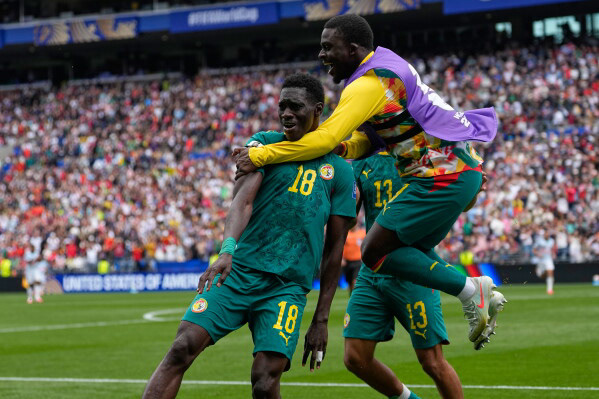
This isn't a Senegal team lacking footballers.
Quite the opposite.
There were stretches during the World Cup where Senegal looked technically capable of playing with almost anyone.
The ability to receive under pressure was there. The combinations were there. The athleticism was obvious. There were players willing to take defenders on, midfielders capable of progressing the ball and attackers who could create something individually.
Even Nicolas Jackson, despite finishing the tournament without a goal, showed some of the qualities that make Senegal's attacking options so intriguing. He appeared in all four matches and produced an assist against Norway.
Then there is Ismaïla Sarr, who scored four times during the tournament, including twice against Norway and once in the knockout match against Belgium.
Add Sadio Mané, Iliman Ndiaye, Lamine Camara, Pape Matar Sarr, Habib Diarra, Assane Diao and the next generation coming through, and there is plenty for a coach to work with.
That's what made Senegal so interesting to watch.
You could see the individual ability.
You could see what the team could become.
But too often, they couldn't consistently connect all of it.
Senegal don't necessarily need a rebuild
This is where Vieira's appointment becomes interesting.
I don't think his first responsibility should be tearing Senegal apart and starting over.
It should be connecting the pieces.
There is a difference.
Senegal scored 10 goals in four World Cup matches. They also conceded nine. They lost three matches by scorelines of 3–1, 3–2 and 3–2.
Those numbers describe a team that could hurt opponents but struggled to control matches when the margins became small.
Sometimes the missing piece was the final pass.
Sometimes it was finishing.
Sometimes it was defensive concentration.
And against Belgium, it was something even more important at international level: knowing how to finish a match.
Going from 2–0 ahead in the 85th minute to 2–2 four minutes later isn't primarily about technical ability.
That's game management.
Recognizing when the match has changed. Slowing the opponent's momentum. Understanding when to attack and when possession itself becomes defensive. Managing space. Managing emotions. Managing the final five minutes differently from the first 85.
Those are the details separating an exciting national team from one capable of going deep into major tournaments.
Bottom line: Plenty of quality. Not enough control.
That may be where Vieira fits
Vieira cannot manufacture another generation of talented Senegalese footballers.
He doesn't need to.
His challenge is turning the talent already available into a more complete team.
That means establishing an identity without removing the freedom that makes Senegal dangerous.
It means finding the right balance between their experienced core and players entering their prime.
And perhaps most importantly, it means teaching this group how to control the moments that decide tournament football.
Vieira arrives with an interesting collection of coaching experiences rather than a spotless managerial résumé.
He has managed New York City FC, Nice, Crystal Palace, Strasbourg and Genoa. Now he enters international management for the first time.
That makes the appointment a gamble.
But it also makes it fascinating.
Because Senegal isn't asking Vieira to build a football nation from scratch.
He's inheriting one that already expects to compete.
Following the World Cup, the Senegalese federation said it wanted to begin a new cycle after evaluating the team's performance and future direction.
The foundation of that next cycle is already visible.
A different kind of homecoming
And then there is the part of this story that football tactics cannot explain.
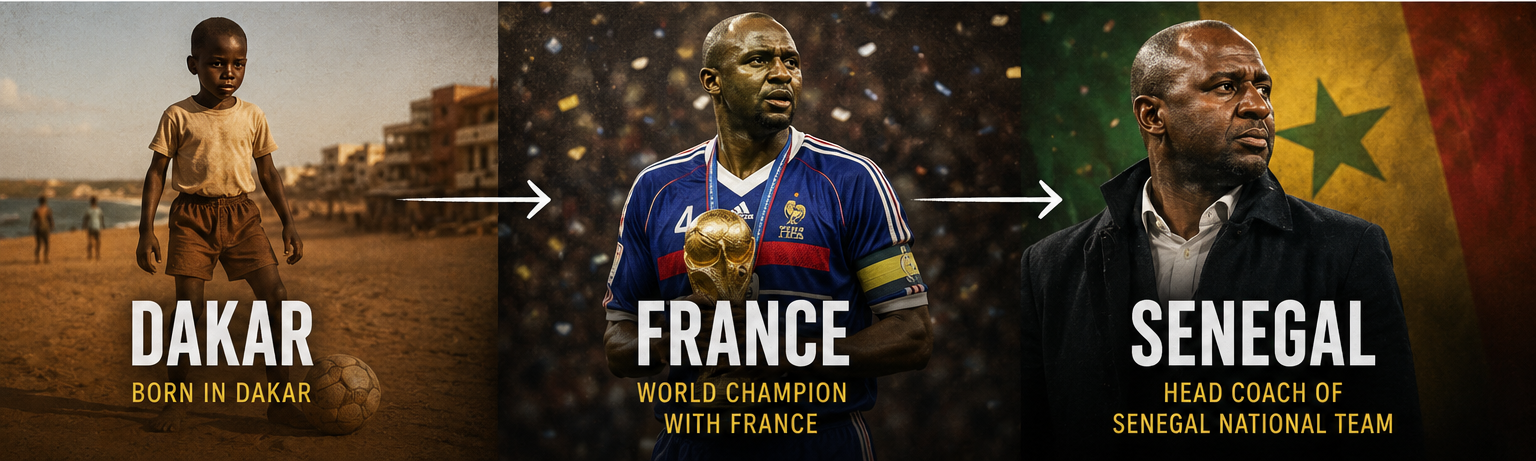
Vieira was born in Dakar before moving to France as a child.
He would eventually represent France 107 times, becoming a World Cup champion in 1998 and European champion two years later.
There is nothing contradictory about that history.
It is simply part of the complicated and fascinating relationship between African football and its diaspora.
Vieira's playing career belonged to France.
His next coaching chapter belongs to Senegal.
That doesn't guarantee success. Birthplace doesn't win matches, and nostalgia doesn't solve tactical problems.
But it does make this appointment something more than another federation hiring another European-based coach.
There is a circle being completed here.
Now comes the difficult part
Vieira isn't inheriting a broken team.
He's inheriting an unfinished one.
And that distinction matters.
Senegal showed at the World Cup that they can create chances, score goals and put talented opponents under pressure.
What they did not consistently show was the ability to turn those moments into results.
The next evolution has to be about details.
The final pass.
The final finish.
The defensive transition.
The decision to accelerate—or slow everything down.
The ability to recognize that when you're 2–0 ahead with five minutes remaining in a World Cup knockout match, the game no longer needs to be beautiful.
It needs to be finished.
If Patrick Vieira can bring that maturity without taking away the technical freedom and personality that make Senegal dangerous, this appointment could become far more important than the homecoming narrative surrounding it.
The pieces are already there.
Now Senegal needs someone to make them fit.